
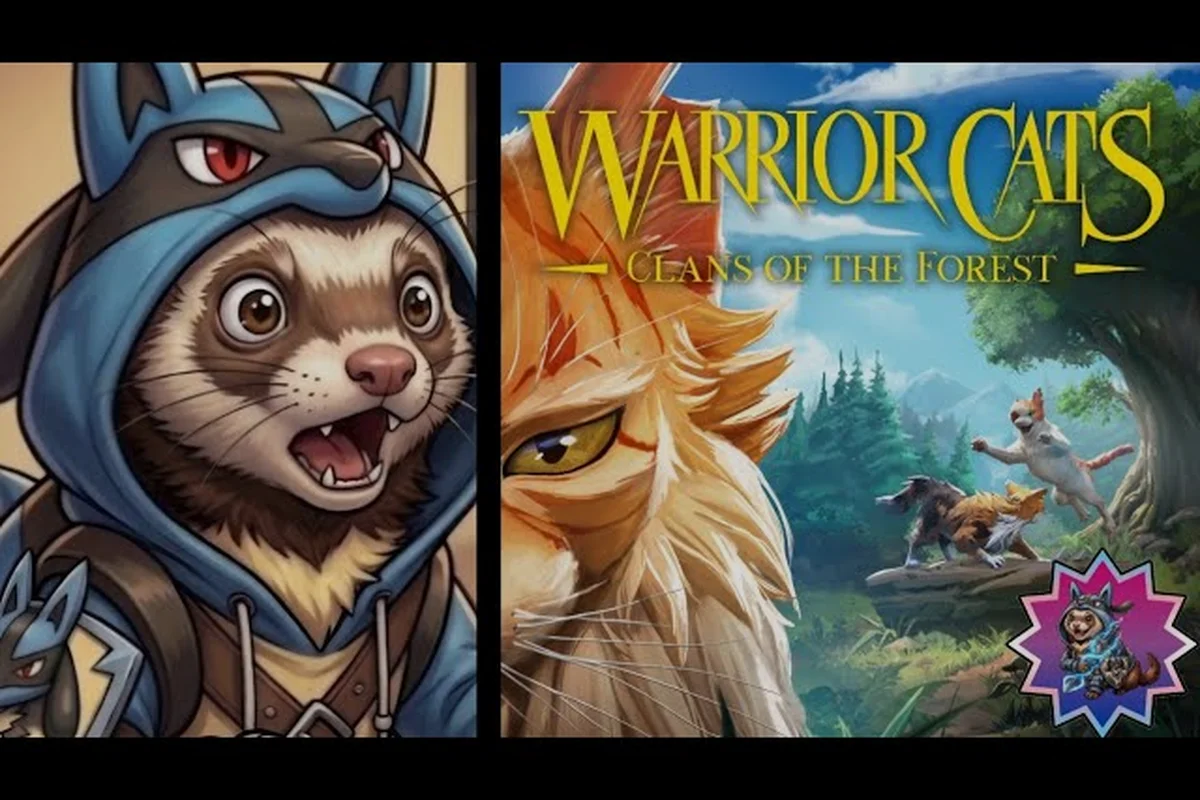
Every cat in the Lake Territories starts somewhere, and for most, that beginning is as a kit. Understanding how warrior cats clans of the forest kits grow into full Clan members is the key to unlocking the game's deepest progression systems, because your early choices determine how quickly you rise through the ranks and how much clan favor you accumulate before adulthood. Discover how the kit stage shapes your entire campaign, from mentorship opportunities to the respect you earn from elders.
The Kit Stage: Your First Steps in the Clan
When you create your cat and choose your Clan, you begin as a kit in the nursery — a vulnerable but crucial phase that many players rush through without realizing its long-term impact. The kit stage in Warrior Cats: Clans of the Forest is not just a tutorial; it's a foundation-building period where your interactions with Clanmates, your curiosity about the territory, and your obedience to the warrior code all feed into your starting reputation with clan metrics.
During this phase, you can't hunt, fight, or patrol. Instead, you learn through observation and small tasks. According to community reports from the August 6, 2026 reveal, the game's four full story campaigns adapt the book series' hierarchy into a progression system where kits must complete specific milestones before becoming apprentices. These milestones include memorizing Clan history from elders, practicing stalking techniques with your mother, and staying inside the camp during leaf-bare storms.
The nursery phase typically lasts 3-5 in-game moons, depending on how actively you engage with available activities. Players who rush through by skipping dialogue and ignoring elder requests often start their apprenticeship with lower clan favor than those who invested time in relationship-building. The game tracks these early interactions silently, and they resurface later when the Clan leader considers you for special missions.
What Kits Can Actually Do
-
Listen to elder stories — each story grants small reputation gains and unlocks lore entries
-
Play with littermates — builds a social bond that affects later patrol synergy
-
Practice pouncing on moss balls — improves your future combat stat growth rate
-
Observe warrior training sessions — grants passive experience toward your apprentice skill tree
The kit stage also introduces the clan ranks explained system through natural gameplay. You'll see warriors leaving for patrols, the deputy organizing hunting parties, and the medicine cat tending to sick elders. Pay attention to these routines, because the game's rank system mirrors the books faithfully — kits become apprentices at six moons, apprentices become warriors after passing assessments, and warriors can eventually become deputies, leaders, and elders.
Clan Ranks Explained: From Kit to Elder
The hierarchy in Warrior Cats: Clans of the Forest follows the traditional structure established in the book series, but the game adds mechanical depth to each rank. Understanding warrior cats clans of the forest clan ranks explained is essential because each rank unlocks different activities, responsibilities, and ways to gain clan favor.
The rank progression ladder starts with kit, then apprentice, warrior, senior warrior, deputy, and finally leader. Alongside this main path, medicine cats and elders occupy special positions that don't follow the standard progression but offer unique gameplay experiences. The game's official materials confirm that each Clan has its own cultural approach to these ranks — ShadowClan values cunning apprentices, while WindClan expects speed from its warriors.
| Rank | Minimum Age | Key Activities | Favor Potential |
|---|---|---|---|
| Kit | Birth | Socialization, learning | Low but foundational |
| Apprentice | 6 moons | Training, hunting practice | Medium |
| Warrior | 12 moons | Patrols, battles, hunting | High |
| Senior Warrior | 24 moons | Mentoring, strategy | Very High |
| Deputy | Varies | Clan management | Highest |
| Leader | Varies | Nine lives, Clan decisions | Legacy-based |
Elders occupy a unique position in this hierarchy. They've retired from active duty but retain immense social influence. In Warrior Cats: Clans of the Forest, elders serve as quest-givers, lore-keepers, and reputation arbiters. When you're a kit, elders are the primary source of warrior cats clans of the forest elders wisdom — and pleasing them early creates a ripple effect that lasts your entire campaign.
The Elder Connection
Elders in the game have a memory system that tracks how you treated them during your kit and apprentice phases. According to player experiences shared on the r/WarriorCats subreddit, cats who regularly brought fresh-kill to the elders' den and listened to their stories received exclusive mentorship opportunities later. One player reported that their kit's kindness to an elder unlocked a hidden side quest involving a forgotten prophecy that the elder had kept secret for seasons.
The elder favor system works independently from general clan favor. While your overall reputation with clan determines your rank advancement speed, elder favor unlocks narrative content, rare items, and alternative dialogue options. This dual-track system rewards players who engage with the game's social simulation rather than just its combat mechanics.
How to Gain Clan Favor as a Kit
The question of how to gain clan favor during the kit stage confuses many new players because the game doesn't explicitly explain the favor system until later. Based on community testing and the official Trailmark Games announcements, favor accumulates through a combination of task completion, social interactions, and code adherence.
Clan favor is the currency of trust in Warrior Cats: Clans of the Forest. It determines whether the deputy assigns you to important patrols, whether the medicine cat shares dream-visions with you, and whether the leader considers you for deputy candidacy. Starting your apprenticeship with high favor gives you a significant head start, as favor requirements for rank advancement are fixed per Clan.
-
Complete every available kit task — even seemingly trivial ones like tidying the nursery
-
Never break the warrior code — hunting outside your territory as a kit is a major favor penalty
-
Interact with every Clanmate daily — the game tracks relationship decay if you ignore cats
-
Ask questions — curiosity is rewarded, especially when directed at elders and the medicine cat
-
Participate in camp events — leaf-bare preparations and border patrol farewells offer favor opportunities
The favor calculation system weighs actions differently depending on your Clan. ThunderClan values bravery and loyalty, so defending a denmate from a snake grants substantial favor. ShadowClan values cunning and stealth, so successfully hiding during a game of hide-and-seek with your littermates earns more favor than a public display of courage. RiverClan values resourcefulness and swimming ability, while WindClan values speed and independence.
Clan Favor Rewards Table
| Favor Tier | Favor Points | Unlocks |
|---|---|---|
| Outsider | 0-99 | Standard training only |
| Recognized | 100-249 | Early apprenticeship, mentor choice |
| Respected | 250-499 | Special patrols, elder quests |
| Trusted | 500-999 | Deputy candidacy, prophecy access |
| Beloved | 1000+ | Leader consideration, unique endings |
The favor rewards system also ties into the game's branching storyline mechanics. Players who achieve Trusted status before their warrior ceremony report receiving different dialogue options during major story beats, including the opportunity to influence Clan decisions about rival territories. This connection between early kit behavior and late-game narrative outcomes is one of the most compelling reasons to take the kit stage seriously.
The Mentor System and Apprentice Transition
When your kit reaches six moons, the Clan leader announces your apprenticeship during a ceremony at the Clan's gathering spot. This transition marks the end of the kit stage and the beginning of your combat training, but the mentor system that governs your apprenticeship has roots in your kit-phase relationships.
Your mentor assignment isn't random — the deputy considers your kit-stage behavior when pairing you with a warrior. According to community reports, kits who showed interest in hunting were paired with skilled hunters, while those who spent time with elders received mentors known for their wisdom and patience. The game's official materials confirm that mentorship affects your skill growth rates, with compatible mentor-apprentice pairs gaining experience 15-20% faster than mismatched pairs.
The mentoring system also interacts with your clan favor in a feedback loop. Successful training sessions with your mentor increase both your skill levels and your favor, while failed sessions or skipped training reduce favor. This creates a natural progression where engaged players advance faster, while those who neglect training fall behind — not just in combat ability but in social standing.
Preparing for Apprenticeship
-
Reach maximum kit-level social bonds with at least three Clanmates
-
Complete all elder story quests to unlock bonus mentor options
-
Practice your future Clan's signature skills — swimming for RiverClan, stalking for ShadowClan
-
Maintain high favor — the deputy checks your favor score before mentor assignment
The transition to apprenticeship also opens the progression guide systems that govern your long-term growth. While kits have limited agency, apprentices gain access to the full skill tree, combat training, and territory exploration. The foundation you build as a kit determines how smoothly this transition goes, and players who invested in the social systems report significantly easier early apprenticeship phases.
Elders as Quest-Givers and Lore Keepers
The warrior cats clans of the forest elders system deserves special attention because it's one of the most unique features in the game. Unlike many RPGs where elderly NPCs are relegated to exposition duty, elders in Clans of the Forest are active quest-givers with their own storylines, secrets, and mechanical benefits.
Elders remember the old prophecies that younger cats have forgotten. As you build your reputation with clan and specifically your elder favor, these ancient cats share fragments of prophecies that hint at future story events. Community data suggests that completing elder quest lines can reveal hidden locations, unlock unique combat moves, and even alter the game's ending — the different endings guide covers how elder knowledge affects your final narrative outcomes.
The elder system also serves a mechanical purpose in the favor economy. Elders can vouch for you during rank advancement ceremonies, effectively reducing the favor requirements for promotion. A kit who befriended elders early might need only 400 favor points for a promotion that normally requires 500, because the elders' public endorsement carries weight with the Clan leader.
| Elder Quest Type | Favor Reward | Unique Reward |
|---|---|---|
| Story Retrieval | +50 | Lore entry, prophecy fragment |
| Fresh-Kill Delivery | +30 | Temporary stat boost |
| Memory Recovery | +75 | Hidden location marker |
| Prophecy Interpretation | +100 | Alternate dialogue options |
The elder favor cap differs from general clan favor. While general favor can be farmed through repetitive tasks, elder favor requires genuine engagement with the narrative. Players who skip dialogue and rush through elder quests report hitting an elder favor ceiling around 300 points, while those who read everything and make thoughtful dialogue choices can exceed 800 points. This design choice rewards attentive players and creates meaningful differentiation between playstyles.
Elder Storylines and Clan Identity
Each Clan's elders tell different stories that reflect their cultural identity. ShadowClan elders speak of marsh spirits and the cunning needed to survive, while WindClan elders tell tales of the open moor and the speed required to thrive there. These stories aren't just flavor text — they contain mechanical hints about each Clan's unique gameplay systems. The ShadowClan campaign guide explores how these cultural differences manifest in combat and exploration.
The elder den itself becomes a hub of activity as you progress. Early in the game, it's a quiet place where you visit to complete quests. Later, it transforms into a strategic resource center where elders offer tactical advice about upcoming battles, share intelligence about rival Clan movements, and even teach specialized moves that aren't available through standard training. This evolution makes the elder system feel alive and responsive to your progression.
Reputation with Clan: Building Lasting Trust
Your reputation with clan is the sum total of your favor, your adherence to the warrior code, and your relationships with individual Clanmates. While favor is a numeric score, reputation is a more holistic measure that affects how NPCs perceive and interact with you. Understanding this distinction is crucial for long-term success.
Reputation affects dialogue options in ways that favor doesn't. A cat with high favor but low reputation might get assigned important tasks but receive cold dialogue from Clanmates. Conversely, a cat with balanced reputation enjoys warmer interactions, better trade prices, and more willing allies during conflicts. The game's choices matter system tracks your reputation through every decision, from how you respond to a distressed apprentice to whether you share your fresh-kill with a hungry elder.
-
Consistency matters — one major code violation can erase weeks of reputation building
-
Public actions weigh more — helping a Clanmate in front of witnesses earns more reputation than private kindness
-
Clan-specific values — each Clan has different reputation priorities based on their cultural identity
-
Cross-Clan interactions count — how you treat cats from rival Clans affects your reputation, especially in ShadowClan and RiverClan
The reputation decay system prevents players from resting on their laurels. If you stop engaging with Clan social systems, your reputation slowly declines — roughly 5 points per in-game moon of inactivity. This encourages ongoing engagement with the game's social simulation rather than treating it as a one-time grind. The reputation guide provides detailed strategies for maintaining high reputation throughout your campaign.
Reputation Milestones and Their Effects
| Reputation Level | Dialogue Changes | Gameplay Effects |
|---|---|---|
| Neutral | Standard responses | No bonuses |
| Friendly | Warmer greetings | 5% discount at Clan vendors |
| Respected | NPCs share rumors | Access to exclusive patrols |
| Admired | NPCs seek your advice | Mentor requests from apprentices |
| Legendary | NPCs defer to you | Influence over Clan decisions |
The legendary reputation tier is exceptionally rare, with community data suggesting fewer than 2% of players achieve it on their first playthrough. It requires not just consistent positive behavior but also completing specific hidden quests and making the right choices during major story events. Players who achieve this tier report that the game's ending sequences change dramatically, with the Clan leader publicly acknowledging your contributions and offering you the choice between becoming deputy or taking on a special ambassador role.
Frequently Asked Questions
How long does the kit stage last in Warrior Cats: Clans of the Forest?
The kit stage lasts approximately 3-5 in-game moons, which translates to roughly 2-3 hours of gameplay depending on how thoroughly you engage with available activities. Rushing through can shorten this to about 90 minutes, but you'll miss valuable favor and relationship opportunities that affect your entire campaign.
Can you skip the kit stage and start as an apprentice?
No, the game requires all players to complete the kit stage as part of the tutorial and narrative setup. However, you can speed through it by ignoring optional activities. Be aware that skipping content reduces your starting clan favor and may lock you out of certain elder quests later.
Do elders provide benefits beyond the kit stage?
Yes, elders remain valuable throughout the entire game. They offer prophecy fragments, tactical advice, and unique combat moves that aren't available elsewhere. Maintaining good relationships with elders is especially important during rank advancement, as their public endorsement reduces favor requirements for promotions.
How does clan favor differ from reputation with clan?
Clan favor is a numeric score that directly gates rank advancement and unlocks specific rewards. Reputation is a broader measure of your social standing that affects dialogue, NPC behavior, and relationship dynamics. High favor with low reputation is possible but creates an awkward gameplay experience where you're trusted with responsibilities but not liked personally.
What happens if you break the warrior code as a kit?
Breaking the warrior code as a kit carries severe penalties, including significant favor loss, reputation damage, and potential restrictions on your apprenticeship mentor choice. The game tracks code violations permanently, and repeated violations can lead to your Clan leader questioning your loyalty during major story moments.